


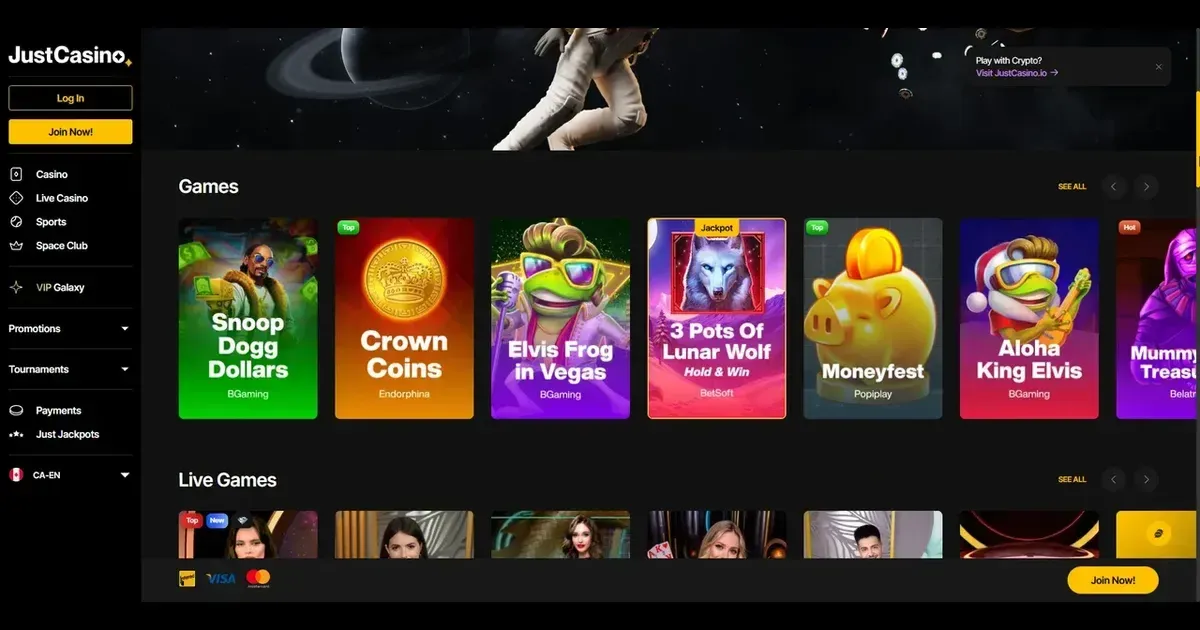
Gambling at Just is built for entertainment – the moment it stops being enjoyable, it's time to take stock. This page covers the warning signs that matter, the questions worth asking yourself, the control tools the operator provides, and the free, confidential support available across the UK for anyone who needs it.
Why responsible gambling matters
Betting and gaming carry real risk. For most people they stay a leisure activity, but for some they tip into something harder to manage. Recognising that shift early – before it costs you money, time or relationships – is the single most useful thing you can do.
The line between fun and compulsion isn't always clear. You don't need a crisis to take a break, and you don't need permission to set a limit. Responsible gambling simply means staying honest about what you're spending and why, and making sure the money and time you put in are amounts you can afford to lose.
Warning signs: when gambling gets out of hand
These behaviours show up often enough that recognising one or two should prompt a conversation – with yourself, or with someone you trust:
- Spending more money or time than you planned, repeatedly.
- Chasing losses – depositing again to try and win back what you've lost.
- Borrowing money, using credit or dipping into savings earmarked for bills to fund your play.
- Lying to family or friends about how much you're gambling, or hiding it altogether.
- Neglecting work, study or personal commitments because you're preoccupied with betting.
- Feeling anxious, irritable or restless when you can't play.
None of these on its own is proof of a problem, but a pattern of several is worth taking seriously. The earlier you act, the easier it is to pull back.
A few questions to ask yourself
A short self-check can clarify whether your gambling is still under control. Answer honestly – nobody else needs to see your responses:
- Do you gamble to escape worry, boredom or loneliness?
- Have you tried to cut down or stop, and found you couldn't?
- Do you feel guilty or ashamed after a session?
- Has gambling caused arguments with people close to you?
- Do you gamble with money you need for rent, food or other essentials?
- After a loss, do you feel a strong urge to play again immediately to recover it?
- Have you sold anything, or borrowed from someone, to fund your play?
- Is gambling affecting your sleep, your appetite or your mood?
If you answered yes to three or more of these, it's worth speaking to someone – whether that's a helpline, a counsellor or a trusted friend. Early conversations are simpler and less daunting than ones you leave until later.
Just's control tools
The operator confirms that access to its platform is restricted to players aged 18 and over (18+). Beyond the minimum-age rule, specific responsible gambling tools – deposit limits, session timers, self-exclusion options – are not detailed in publicly available material. If you hold an account with Just, check the settings menu or contact the operator's support team directly for information on what controls you can apply to your own play.
Good to know: even when a site doesn't publish a full responsible-gambling toolkit, most operators can still apply manual limits or close accounts on request. If you need a break, ask for one – support teams are used to handling these conversations, and they're required to process them.
Tips for gambling sensibly
Keeping control is easier when you plan ahead. These five habits help most people stay on track:
- Set a budget before you start – decide how much you can afford to lose, treat that money as the cost of entertainment, and stop when it's gone.
- Set a time limit – gambling for hours at a stretch makes it harder to think clearly. Decide in advance how long you'll play, and stick to it.
- Never chase losses – a losing streak doesn't mean a win is "due". Walk away, come back another day if you still want to play.
- Don't gamble on credit – only use money you already have. Borrowing to play is one of the clearest warning signs that things have shifted.
- Keep gambling separate from other parts of your life – if a session is affecting your mood, your work or your relationships, that's a sign to take a break.
Where to find help in the UK
Free, confidential support is available right now, whether you're worried about your own gambling or someone else's. You don't need to wait for a crisis, and you don't need to explain yourself to anyone before reaching out.
GamCare runs the National Gambling Helpline: 0808 8020 133, open 24 hours a day, 7 days a week. Calls are free and confidential. The service also offers live chat and email support through gamcare.org.uk.
BeGambleAware (begambleaware.org) provides information, advice and referrals to treatment services across the country. The site includes a self-assessment tool and guides for friends and family.
GamStop (gamstop.co.uk) is a free national self-exclusion scheme. Register once and you'll be blocked from all UK-licensed gambling sites for a period you choose – six months, one year or five years. It's a straightforward way to put distance between yourself and online play.
Gordon Moody (gordonmoody.org.uk) offers residential treatment and online therapy programmes for people with serious gambling problems. Referrals can come from GPs, support services or self-referral.
Blocking software
If you want to prevent access to gambling sites on your own devices, two free tools are widely used in the UK:
- Gamban (gamban.com) – installs on phones, tablets and computers, blocks tens of thousands of gambling sites and apps, and can't be easily removed once active.
- BetBlocker (betblocker.org) – free, open-source blocking software for multiple platforms. Works on desktops, mobiles and routers.
Both tools are designed to be difficult to bypass, which is the point – they give you friction when temptation arrives, and that friction is often enough to break the impulse.
Protecting minors
Gambling sites are restricted to adults aged 18 and over. If you share a device with children or teenagers, parental-control software – such as Net Nanny, Qustodio or the controls built into iOS and Android – can block access to gambling domains and apps. Worth setting up as a background safeguard, even if you trust the young person in question: the controls exist to prevent accidental exposure, not just deliberate access.
Final thought
Gambling should be entertainment, not an obligation. The moment it stops feeling optional – or the moment you find yourself playing to fix something rather than enjoy something – is the moment to step back. Help is available, it's confidential, and reaching out early is always easier than waiting.
For questions about this page, write to [email protected].
This content is provided for information and marketing purposes. We are not a gambling operator, bookmaker or organiser of betting or gaming activity. This site is restricted to visitors aged 18 and over (18+). Free, confidential support with gambling is available at BeGambleAware.org.